What causes most EPDM roof leaks in Center Grove?
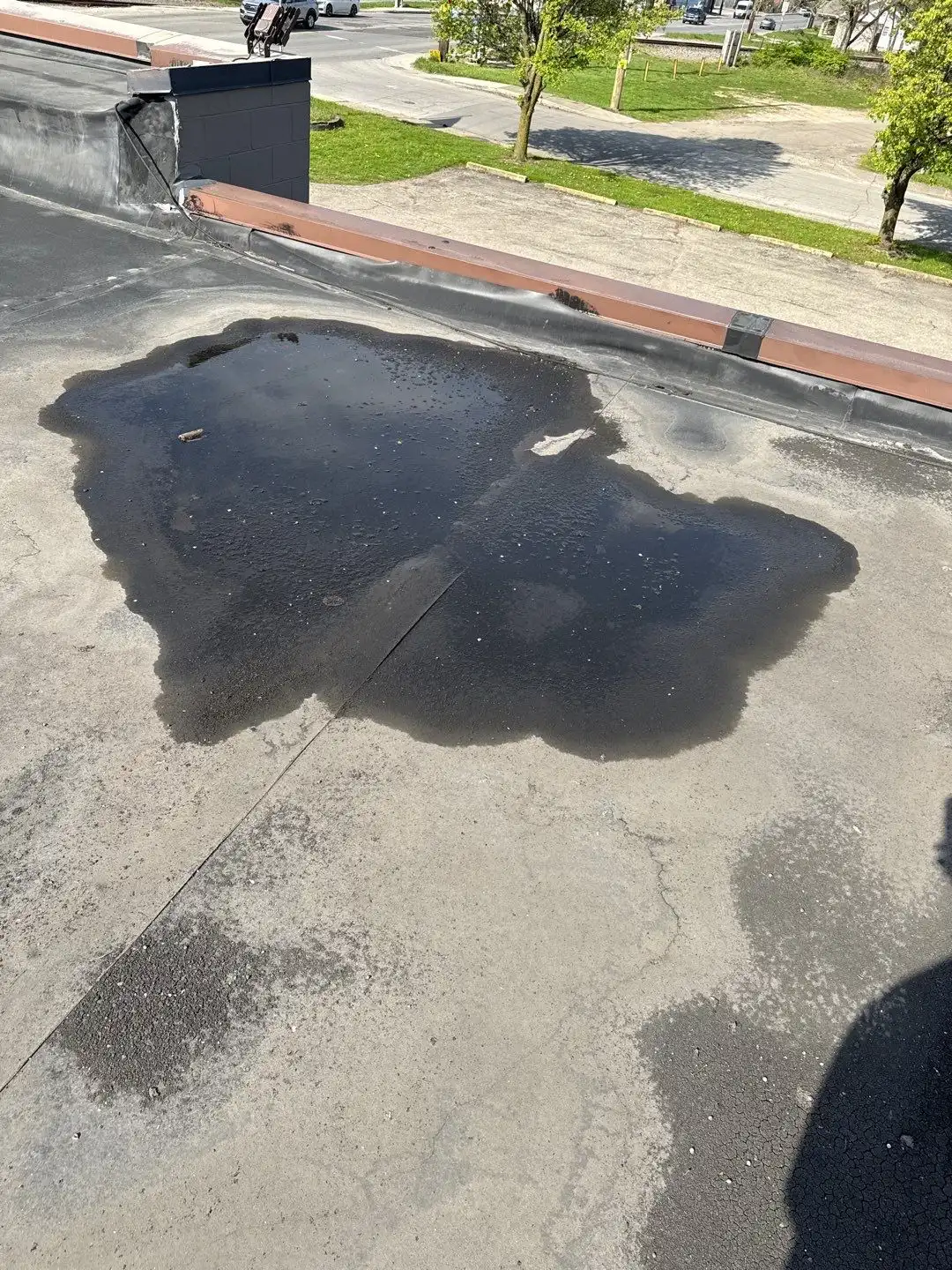
Rubber roofs rarely fail in the middle of the membrane. The field sheet itself is tough and flexible. Leaks almost always start at transitions, seams, penetrations, and edges. In Center Grove, the most common culprits we find are split seams where old adhesive has dried out, cracked pipe boots around HVAC and plumbing vents, separated flashings at parapet walls, and punctures from foot traffic or hail. Ponding water near drains accelerates everything because it keeps the membrane saturated and stresses the adhesive bonds. After a hard winter, freeze thaw movement can pull seams apart by a fraction of an inch, which is all water needs to find its way into the insulation below.
We also see a lot of damage caused by rooftop service work. HVAC techs, satellite installers, and sign companies walk across the roof without protection boards, drop tools, and leave behind screws or sheet metal scraps that puncture the membrane weeks later when someone steps on them. Grease from kitchen exhaust fans is another quiet killer. EPDM does not tolerate petroleum based contaminants well, and a slow drip from a poorly maintained grease trap will soften the rubber until it tears. When Center Grove Commercial Roofing inspects a roof in Center Grove, we look for these maintenance related causes as carefully as we look for weather damage, because they tell us whether a repair will hold or whether the same problem will come back next season.
How do you actually find the leak on a rubber roof?
Finding the entry point on an EPDM roof takes more than walking around looking for obvious damage. Water can travel several feet across the deck before dripping into your building, so the wet ceiling tile is rarely under the actual hole. We start with a visual inspection of seams, penetrations, and edge metal, then use moisture meters and thermal imaging to map saturated insulation under the membrane. For tougher cases, we use moisture mapping with thermal imaging to see exactly where wet insulation ends and dry insulation begins. That tells us how much of the roof is actually compromised and how much can stay. If you want more detail on the diagnostic process before repair, our piece on roof leak origin detection walks through how we separate the leak source from the damage location.
On flat roofs with internal drains, we also check the drain bowls and clamping rings, because a loose clamp will let water sneak under the membrane and travel along the deck for yards. Skylights, scuppers, and through wall conduit penetrations get a close look as well. Documenting every suspected entry point with photos and meter readings gives you a clear record for insurance if a storm event is involved, and it gives the repair crew a punch list instead of guesswork.
When does it make sense to recover or replace instead of repair?
If more than 25 percent of your insulation is wet, if seams are failing in multiple areas, or if the membrane is shrinking and pulling at the perimeter, recover or replacement usually beats chasing leaks. A recover lays new membrane over the existing one and is faster and cheaper than a tear off. A full replacement is the right call when the insulation is saturated or the deck has rust or rot. We give you both numbers so you can compare the cost of ongoing repairs against the cost of a long term fix.
What should you do the moment you see a ceiling stain?
Move anything valuable away from the drip zone, put a bucket down, and take a photo with the date. Call us so we can schedule an inspection and assess severity over the phone. If the leak is active and water is coming in fast, we prioritize tarping and dry in to stop interior damage before it spreads to insulation, drywall, and electrical fixtures. The faster the source is contained, the less you pay in interior repairs later.
How can you extend the life of an EPDM roof you already have?
Most roofs we inspect in Center Grove would have lasted years longer with simple upkeep. A twice yearly walk, once in spring and once in fall, catches small problems before they reach the insulation. Clear leaves and debris from drains and scuppers so water cannot pond. Trim back tree branches that scrape the membrane in the wind. Keep a logbook of any rooftop work, including who walked up there and what they did, so Center Grove Commercial Roofing has a history to reference when something goes wrong. Apply walk pads anywhere service technicians need to reach equipment. These habits are cheap compared to a recover, and they protect the warranty if you still have one.
How long will a rubber roof repair actually last?
A properly done EPDM repair using cover tape and compatible primer can last 10 to 15 years if the surrounding membrane is still in good shape. The repair itself is not usually the weak point. What matters is the age and condition of the membrane around it. If your roof is 20 years old and the rubber has shrunk, chalked, or pulled away from the edges, a patch will hold but new leaks will keep showing up elsewhere. At that point you are buying time, not solving the problem. We will tell you when a roof has more repairs ahead of it than it has life left.
Can you repair EPDM in cold or wet weather?
Yes, but with limits. EPDM adhesives and seam tapes need clean, dry, reasonably warm surfaces to bond properly. In Center Grove winters, we can still do emergency dry in work using compatible cold weather products, but a permanent repair is better done when the membrane is above 40 degrees and dry. For active leaks during a storm or snow event, we prioritize tarping and temporary patching to stop interior damage, then return for the permanent fix when conditions allow. If the leak is causing water to spread inside, we coordinate with our restoration side to start water mitigation and emergency drying at the same time so the building does not develop mold while the roof is being addressed.
What does EPDM repair cost in Center Grove?
Pricing depends on how localized the damage is and what condition the rest of the membrane is in. A single pipe boot replacement is inexpensive. A long seam repair across a section of roof costs more because of labor and prep. Here is what we typically see on Center Grove commercial buildings:
Access matters too. A single story building with a parking lot next to it is straightforward. A four story building with no roof hatch, limited setdown space for materials, and a tight downtown alley adds rental costs for lifts or cranes. We always walk the access route with you before quoting so there are no surprises on invoice day.